
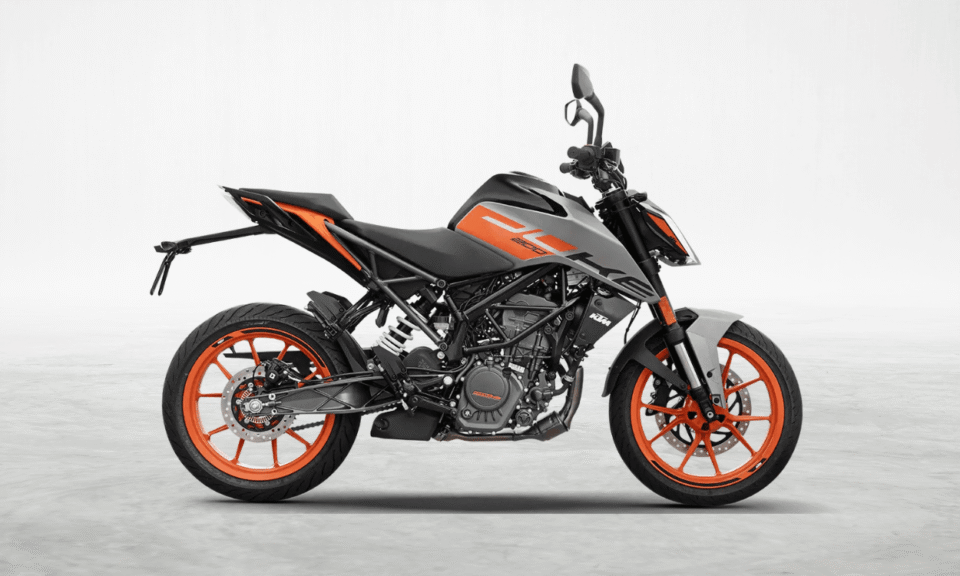
KTM has officially concluded its long-standing ownership relationship with Salzburg-based design agency KISKA, marking the end of a creative partnership that has shaped the Austrian motorcycle brand’s identity for over three decades. The company has sold all its remaining shares in KISKA to technology firm Loxone GmbH.
The move forms part of the broader restructuring process initiated after Bajaj Auto’s acquisition of Pierer Mobility AG, KTM’s parent company.
End of a Three-Decade Creative Alliance
KISKA has played a pivotal role in defining KTM’s aggressive and performance-oriented visual identity since the early 1990s. The agency’s involvement extended far beyond motorcycle styling, contributing to product engineering, brand strategy, communication, apparel, and experiential design.
Over the years, KISKA became deeply integrated into KTM’s growth story. At its peak, Pierer Mobility AG held up to 50 percent ownership in the agency, making KTM not only KISKA’s largest client but also a major investor.
However, the evolving corporate structure under Bajaj Auto’s leadership has led to a strategic realignment. Loxone GmbH will now acquire KTM Group’s shares, increasing its stake in KISKA to 71 percent. The remaining 29 percent will continue to be held by KISKA’s management and executive leadership.
Financial Strain and Strategic Reset
KISKA Managing Director and co-owner Julian Herget acknowledged that the agency’s dependence on KTM had become structurally challenging. He noted that while the firm had experienced steady growth, the disproportionate scale of KTM’s orders created operational imbalance.
Following KTM’s bankruptcy proceedings, KISKA was forced to lay off 42 employees. Herget admitted that without the bankruptcy, the agency would have remained in a secure position despite broader economic headwinds. He emphasized that moving forward, KISKA will avoid becoming overly reliant on a single client.
KTM to Establish Independent Design Centre
As part of its strategic shift, KTM will establish a dedicated in-house design centre in Salzburg. This new facility will operate independently from the company’s primary development base in Mattighofen, allowing KTM to bring the design process closer to its internal operations.
By internalizing design capabilities, KTM aims to achieve tighter integration between product strategy, engineering, and brand direction. This transition reflects a broader industry trend where manufacturers seek greater control over core competencies.
What Changes for KTM’s Design Language?
In the short term, significant changes to KTM’s styling philosophy are unlikely. Motorcycle development cycles span several years, and upcoming models currently in the pipeline were conceptualized under the existing framework.
Even as KTM transitions to an internal design structure, the brand is expected to maintain its signature sharp, aggressive aesthetic a defining characteristic that has distinguished it in the global motorcycle market.
The separation from KISKA signals the end of a historic collaboration, but it also marks the beginning of a new chapter in KTM’s evolution — one where creative direction will now be shaped entirely from within.